
By: M. Adhie Pamungkas
Environmental Observer
Every dry season, many regions across Indonesia once again face shortages of clean water, crop failures, forest fires, and declining agricultural productivity. Ironically, these problems continue to recur year after year. This raises an important question: Is drought merely a natural phenomenon, or does it reflect a much deeper problem?
From a scientific perspective, climate change has undoubtedly contributed to rising global temperatures and shifting rainfall patterns. Climate phenomena such as El Niño can prolong the dry season, making drought conditions even more severe. However, natural factors alone do not fully explain the problem. In many cases, drought is an ecological disaster that is significantly influenced by human activities.
The conversion of forests into residential areas, industrial zones, and mining sites has greatly reduced the land’s ability to absorb rainwater. Deforestation in upstream watersheds causes rainwater to flow directly into rivers and eventually the sea before it can replenish groundwater reserves. As a result, the rainy season often brings devastating floods, while the dry season leaves communities struggling with severe water shortages.
Moreover, the degradation of water catchment areas, river pollution, excessive groundwater extraction, and the lack of public awareness about environmental stewardship have further aggravated the situation. The water crisis is not merely a climate crisis—it is also a crisis of environmental governance and human responsibility.
The Holy Qur’an reminds us that environmental degradation is often the consequence of human actions. Allah the Almighty says:
«”Corruption has appeared throughout the land and sea because of what people’s hands have earned, so He may let them taste part of the consequences of what they have done, that perhaps they will return (to the right path).”
(Qur’an, Surah Ar-Rum 30:41)»
This verse teaches that humanity bears a moral responsibility as God’s stewards (khalifah) on earth to preserve the balance of nature rather than exploit it without limits.
What, then, are the concrete solutions?
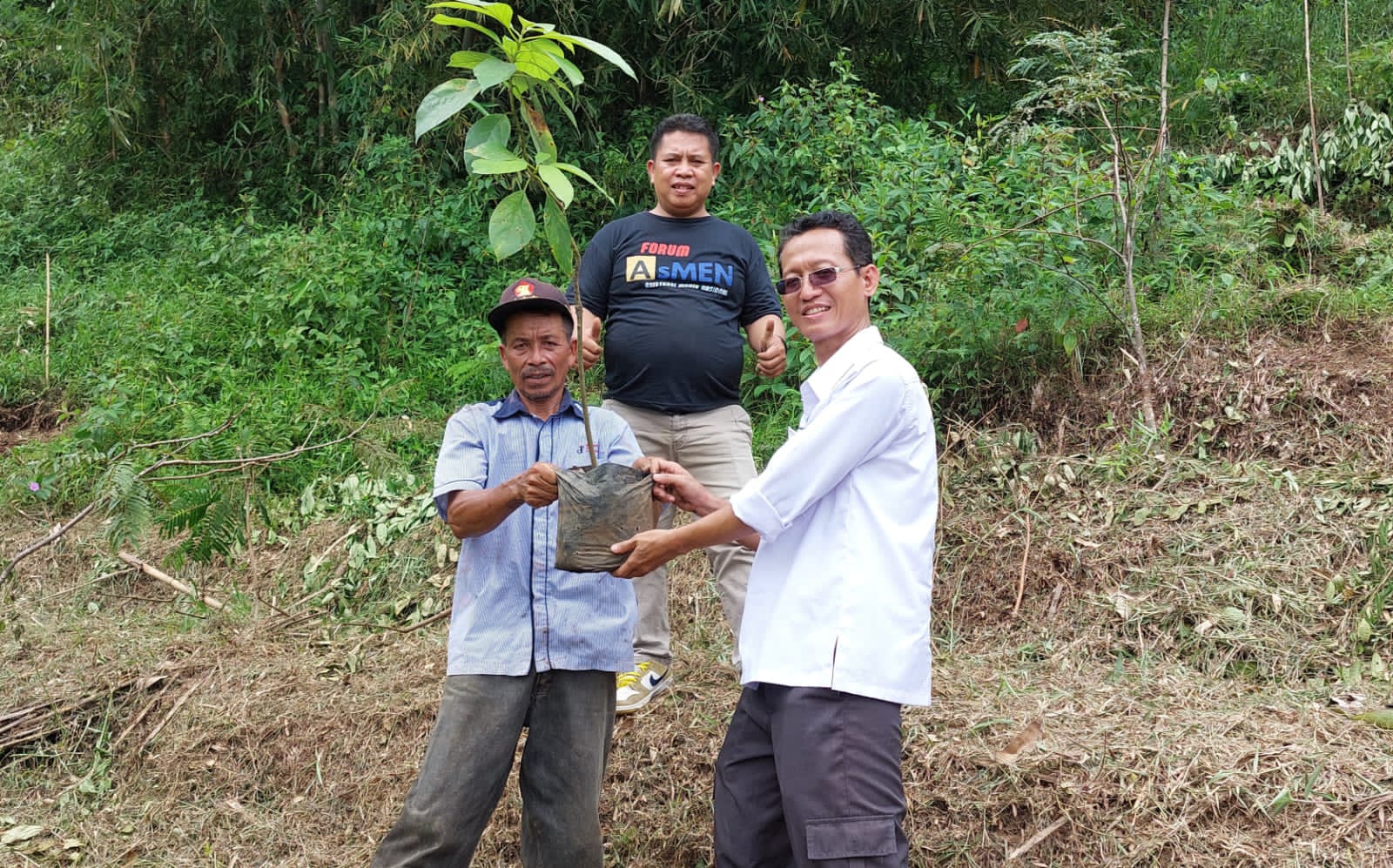
First, restore upstream ecosystems through reforestation, tree planting, and the protection of water catchment areas. Planting trees is not merely about beautifying the landscape; it is a long-term ecological investment that sustains the natural water cycle.
Second, strengthen water conservation by constructing small reservoirs, retention ponds, infiltration wells, biopore systems, and rainwater harvesting facilities. Rainwater should be treated as a valuable resource to be stored rather than simply drained away.
Third, promote sustainable agriculture that conserves water, maintains soil fertility, and adopts more efficient irrigation technologies. Food security depends fundamentally on the health of our ecosystems.
Fourth, cultivate ecological awareness from an early age. Environmental education should become an integral part of character development so that every individual understands that protecting nature means protecting the future of humanity.
Fifth, reinforce collaboration among governments, businesses, universities, civil society organizations, and local communities in environmental restoration efforts. Ecological challenges cannot be solved by any single institution acting alone.
From the Islamic perspective, every effort to protect and restore the environment is considered an act of worship. The Prophet Muhammad (peace be upon him) said:
«”If a Muslim plants a tree or sows seeds, and then a person, a bird, or an animal eats from it, it is regarded as an act of charity (sadaqah) for him.”
(Sahih al-Bukhari)»
This hadith demonstrates that planting trees and caring for the environment are not merely ecological actions but also righteous deeds rewarded by Allah.
Ultimately, drought is not simply the result of insufficient rainfall. It is a reflection of the relationship between humanity and nature. If we continue to degrade the environment, ecological disasters will continue to recur. On the other hand, if we cultivate philosophical awareness to understand humanity’s role as the guardian of the Earth, ecological awareness to conserve and restore the environment, and social awareness to work together in protecting our shared natural resources, the impacts of drought can be significantly reduced, while the well-being of society can be enhanced.
Protecting water means protecting life. And protecting life is a shared responsibility that belongs to all of us.